
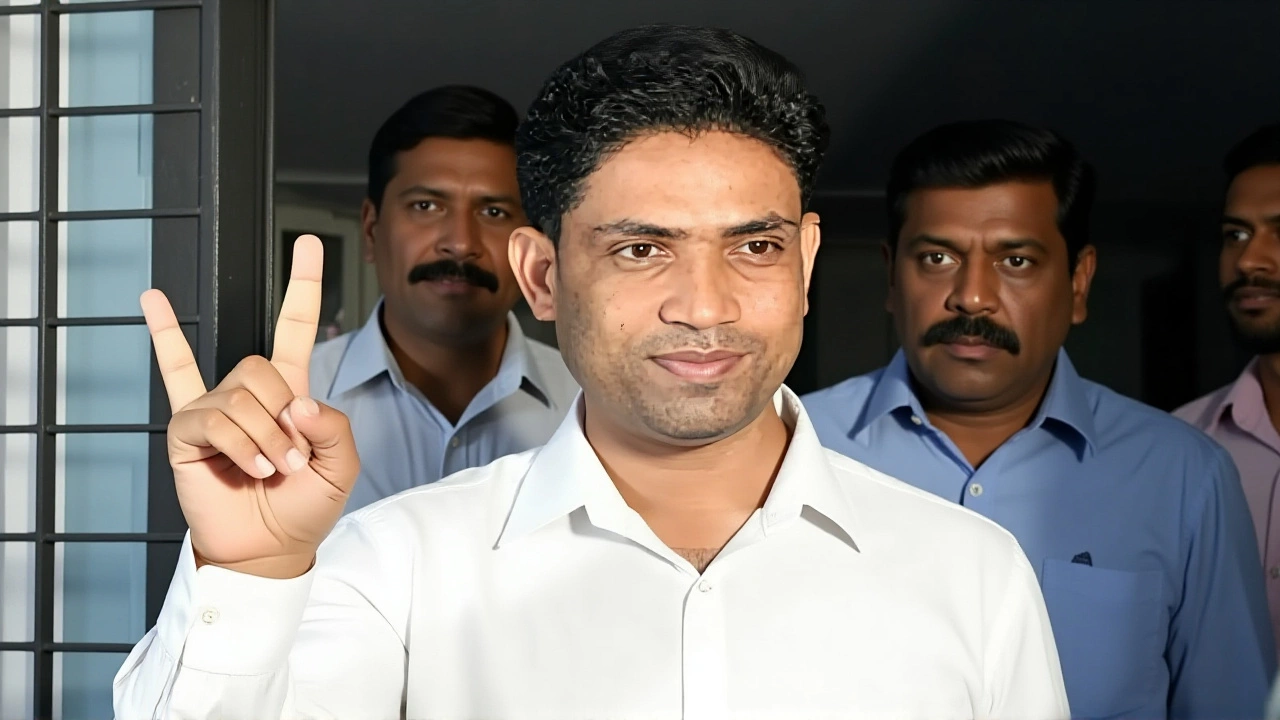
When the final Electronic Voting Machine (EVM) counts were tallied on 4 May 2026, it wasn't just another election result—it was a political earthquake in Falta. Debangshu Panda, candidate for the Bharatiya Janata Party, didn't just win; he obliterated the field with a staggering margin of 1,09,021 votes. In a constituency that had previously been a stronghold for local rivals, this landslide victory signals a dramatic shift in the political landscape of South 24 Parganas.
The twist? This wasn't the original vote. The entire process was rerun after allegations of irregularities marred the initial polling on 29 April 2026. So, when voters turned out in droves for the repoll, they weren't just casting ballots—they were making a statement about who they trusted to clean up the mess.
A Landslide Built Round by Round
Here’s the thing about election day: the early numbers can be misleading. But as the counting progressed through 22 rounds at the Falta counting center, the trend became undeniable. By 9:30 am, Panda was already leading by nearly 10,000 votes. By noon, that lead had swollen past 25,000.
It wasn't until the late afternoon that the scale of the victory truly sank in. Senior BJP leader Suvendu Adhikari, who had boldly predicted a massive win, saw his forecast come true when the margin crossed the 100,000-vote threshold. Final figures from the Election Commission of India confirmed Panda secured 1,49,666 votes—representing a dominant 71.2% share of the total valid votes cast.
His closest competitor, Sambhu Nath Kurmi of the Communist Party of India (Marxist), polled only 40,645 votes. That’s less than one-third of Panda’s tally. For context, in previous elections, margins in Falta were often decided by thousands, not hundreds of thousands.
The TMC’s Humbling Day
If there’s a story within the story, it’s the collapse of the ruling party’s influence here. The All India Trinamool Congress (TMC), which has dominated West Bengal politics for over a decade, found itself in last place among major parties.
Their candidate, Jahangir Khan, made headlines before the vote even started. Known for comparing himself to the fictional character 'Pushpa,' Khan announced he was "backing out" of active campaigning just two days before the repoll. Oddly enough, he remained on the ballot because the statutory deadline for withdrawal had passed.
The result? A resounding rejection. Khan finished fourth with just 7,783 votes (3.7%). Even independent candidates outperformed him. It’s a stark reminder that in Indian politics, showing up isn’t enough—you have to fight for every single vote. The Indian National Congress also struggled, with their candidate Abdur Razzak Molla securing only 10,084 votes.
Why Falta Matters
Turns out, Falta isn't just any constituency. Historically, it had elected TMC candidates like Tamonash Ghosh in prior cycles. The swing to the BJP represents more than a seat change; it’s a barometer for voter sentiment in South 24 Parganas, a region with complex socio-political dynamics.
The repoll itself was conducted under heavy security, reflecting the tension surrounding the initial allegations of malpractice. Despite the controversy, voter turnout remained high, suggesting that citizens were eager to participate in correcting the democratic process. The Election Commission deployed extra monitoring teams, ensuring that the 2,10,192 votes counted were legitimate.

What’s Next for West Bengal?
This victory gives the BJP a significant morale boost ahead of future state-level contests. Suvendu Adhikari hailed the win as proof that the tide is turning against the incumbent government. However, one seat doesn’t rewrite an entire assembly’s composition. The real test will be whether this momentum can be replicated in other strongholds.
For now, the focus shifts to formalizing the results. The Election Commission will issue Form-20, the statutory document confirming the winner. Until then, the celebrations in Falta continue—a rare moment of clarity in an otherwise chaotic election cycle.
Frequently Asked Questions
Why was a repoll ordered in Falta?
The repoll was mandated by the Election Commission of India following reports of serious irregularities during the original second-phase voting on 29 April 2026. These allegations included claims of booth capturing and manipulation of voting machines, prompting authorities to cancel the initial results and schedule a fresh poll to ensure a free and fair election.
Who won the Falta Assembly seat in the 2026 repoll?
Debangshu Panda of the Bharatiya Janata Party (BJP) won the seat decisively. He secured 1,49,666 votes, defeating the Communist Party of India (Marxist) candidate Sambhu Nath Kurmi by a massive margin of 1,09,021 votes. This represented 71.2% of all valid votes cast in the constituency.
How did the TMC candidate perform despite withdrawing from campaigning?
Jahangir Khan, the All India Trinamool Congress candidate, performed poorly, finishing fourth with only 7,783 votes. Although he announced he was "backing out" of active campaigning two days before the poll, he remained on the ballot due to missed withdrawal deadlines. His low vote count highlights a significant disconnect between the party leadership and ground-level support in this specific constituency.
What is the historical significance of this result for the BJP?
Falta was previously considered a stronghold for the Trinamool Congress, having elected TMC candidates in earlier elections. Debangshu Panda’s landslide victory marks a dramatic political shift, demonstrating the BJP’s growing appeal in South 24 Parganas. It serves as a key indicator that the BJP can challenge entrenched regional powers in areas where voter dissatisfaction with the status quo is high.
Was the repoll conducted securely?
Yes, the repoll was held under heightened security measures. The Election Commission deployed additional personnel and monitored the counting process closely across 22 rounds. Media reports noted heavy security presence at counting centers, and no major incidents were reported during the repoll, allowing for a smooth declaration of results.